Space: the final frontier where dreams of interstellar travel collide with the harsh reality of physics. Ever wondered how fast we can zip through the cosmos with the technology at our fingertips? Spoiler alert: it’s not exactly warp speed, but it’s still pretty cool.
Overview of Space Travel Speeds
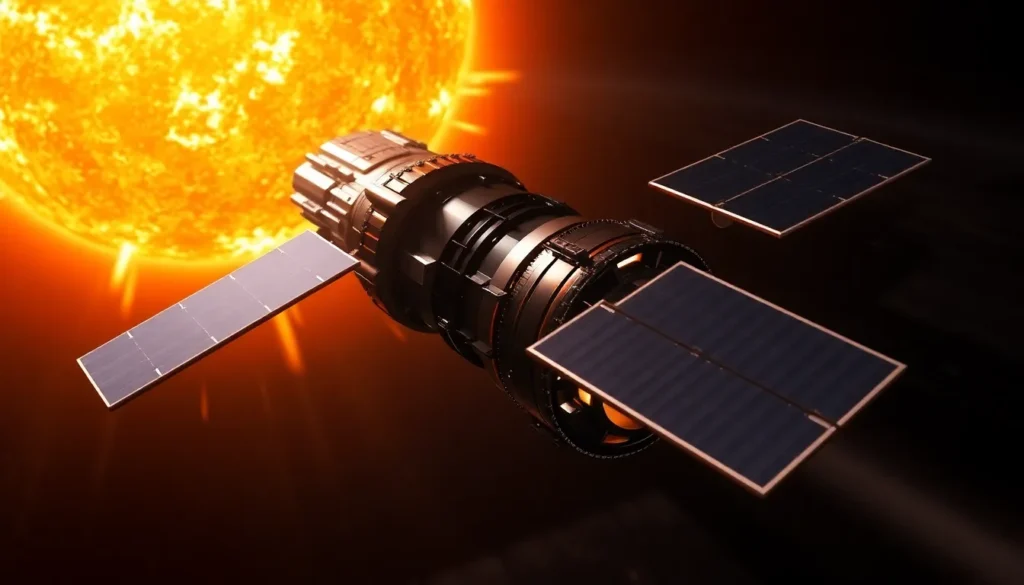
Current technology enables notable speeds in space travel, yet significant limitations remain. The fastest spacecraft achieving Earth’s orbit is the Parker Solar Probe, reaching approximately 430,000 miles per hour (700,000 kilometers per hour). This remarkable speed is due to its close approach to the Sun, utilizing gravitational assists.
NASA’s New Horizons mission, which flew by Pluto in 2015, traveled at about 36,000 miles per hour (58,000 kilometers per hour). This speed facilitated its journey across the vastness of our solar system within just nine years. While it substantiates human capability for speed, interstellar travel remains out of reach.
In comparison, the Voyager 1 spacecraft exemplifies long-term travel efficiency, currently moving at around 38,000 miles per hour (61,000 kilometers per hour). Since its launch in 1977, it has become the farthest human-made object from Earth, providing invaluable data on the outer planets and beyond.
Space agencies are exploring advanced propulsion methods that could enhance travel rates. Ion propulsion systems, used in missions like Dawn, deliver continuous thrust over extended periods, offering efficient travel within the solar system.
Though humanity hasn’t yet approached the velocity needed for interstellar journeys, advancements in technology and research foster optimism for future breakthroughs. Scientists continue to investigate theoretical concepts, such as warp drives and wormholes, that could revolutionize space travel speeds. Current propulsion systems, however, still dictate practical limits on how fast we can travel in space.
Current Spacecraft Technologies
Humanity employs various spacecraft technologies to explore space at remarkable speeds. Understanding these methods highlights the capabilities and limitations of current travel.
Chemical Rockets
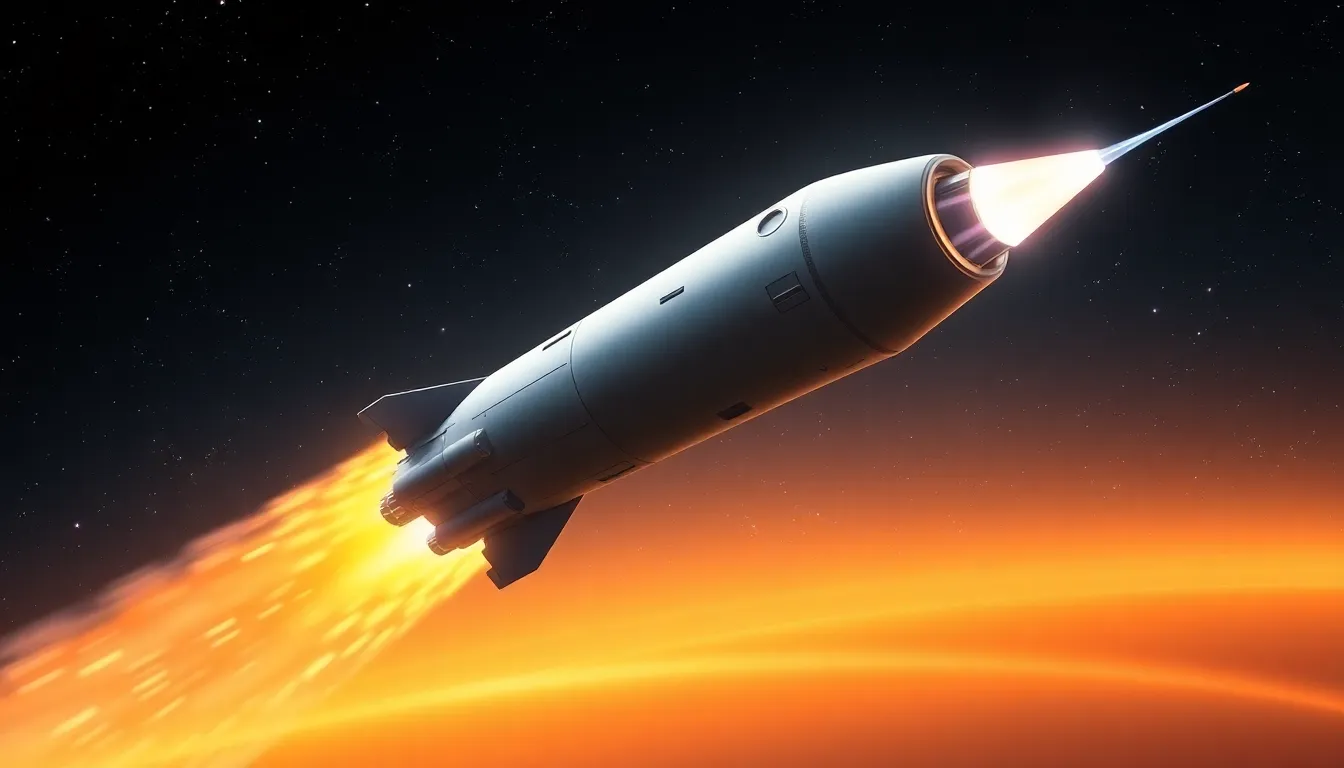
Chemical rockets dominate the space launch industry due to their powerful thrust capabilities. They work by burning propellants, which produces hot gases that provide propulsion. Spacecraft like the Space Shuttle and the Falcon 9 utilize this technology, enabling them to reach low Earth orbit at speeds around 17,500 miles per hour. While effective for launching payloads, chemical rockets face challenges, such as limited fuel efficiency and decreasing performance over long distances. Relying on this traditional approach keeps humanity tethered to practical speeds, which are inadequate for interstellar travel.
Electric Propulsion
Electric propulsion represents a growing field in space travel aimed at increasing efficiency. These systems, such as ion thrusters, use electricity to accelerate ions, generating thrust over prolonged periods. Significant missions like Dawn and BepiColombo showcase this technology, achieving speeds up to 60,000 miles per hour. Although electric propulsion systems excel in efficiency and can sustain thrust for extended durations, they provide lower thrust levels initially compared to chemical rockets. As scientists refine electric propulsion, it plays a crucial role in future missions beyond our solar system.
Speed Records in Space Exploration
Space exploration has witnessed significant speed records in the context of its technological advancements. These records highlight the impressive capabilities of various missions.
Voyager Missions
Voyager 1 and Voyager 2, launched in 1977, have become benchmarks in space travel. Voyager 1 travels at approximately 38,000 miles per hour, making it the fastest human-made object in space. This spacecraft continues its journey through interstellar space, providing valuable scientific data. Voyager 2, slightly slower, has reached around 36,000 miles per hour. Both spacecraft have exceeded 14 billion miles from Earth, showcasing the longevity and efficiency of their missions.
New Horizons
New Horizons captured attention as it flew by Pluto in July 2015. This spacecraft achieved speeds of about 36,000 miles per hour, covering the distance to Pluto in just nine years. After its Pluto encounter, New Horizons continued its journey deeper into the Kuiper Belt. Now, it explores other distant objects, pushing the boundaries of our understanding of the solar system. This mission exemplifies how high-speed travel expands humanity’s reach into the cosmos.
Future Technologies on the Horizon
Innovations in space travel continue to emerge, pushing the boundaries of what’s achievable. Current research into advanced propulsion methods shows promise for future exploration.
Nuclear Thermal Propulsion
Nuclear thermal propulsion, a method leveraging nuclear reactions, offers potential for significant speed enhancements. Compared to traditional chemical rockets, this technology provides higher thrust and improved fuel efficiency. A nuclear thermal engine can heat a propellant, such as hydrogen, to incredibly high temperatures, creating a powerful thrust. Studies suggest that missions utilizing this technology could cut travel times to Mars down to three months as opposed to six. This reduction in travel duration enhances the safety of astronauts and opens new avenues for deep space exploration.
Solar Sails
Solar sails present an innovative approach to propulsion using sunlight for thrust. By deploying large, reflective sails, spacecraft can harness solar radiation pressure. This technique results in continuous acceleration over time, allowing for impressive speeds. Examples include the Planetary Society’s LightSail, which demonstrated solar sailing in space. Estimates indicate that solar sails could achieve speeds exceeding 10,000 miles per hour for long-duration missions beyond the solar system. With their ability to operate without traditional propellant, solar sails represent a sustainable option for future interstellar travel.
Limitations of Current Technologies
Current technologies impose several limitations on space travel speeds. Chemical rockets dominate launch systems, offering significant thrust but lacking efficiency over vast distances. They reach speeds around 17,500 miles per hour for low Earth orbit missions, yet fuel limitations restrict long-term capabilities.
Electric propulsion systems show potential for more efficient travel, attaining speeds up to 60,000 miles per hour in specific missions like Dawn and BepiColombo. These systems excel in prolonged thrust but deliver lower initial thrust, making them less suitable for launch.
Spacecraft such as the Parker Solar Probe achieve impressive speeds, nearing 430,000 miles per hour during close solar approaches. However, this speed is only temporary, not indicative of general space travel speeds.
Research into advanced propulsion methods like nuclear thermal propulsion may provide breakthroughs. This technology could potentially reduce travel time to Mars, cutting six-month journeys in half.
Additional innovations, including solar sails, aim for continuous acceleration. Such systems could exceed speeds of 10,000 miles per hour for prolonged missions, yet remain largely theoretical.
Voyager missions set notable benchmarks, with Voyager 1 and Voyager 2 maintaining speeds around 38,000 miles per hour and 36,000 miles per hour respectively. These missions, while groundbreaking, also highlight the ongoing challenges in achieving faster interstellar travel.
Existing propulsion technologies impose substantial speed limitations, hindered by fuel efficiency and thrust capabilities. Future exploration will rely on developing innovative propulsion systems to truly enhance space travel speeds.
Current space travel speeds showcase humanity’s remarkable achievements despite the limitations imposed by physics. While reaching interstellar destinations remains a distant dream, advancements in propulsion technology offer hope for the future. The impressive speeds of the Parker Solar Probe and the ongoing development of electric and nuclear propulsion systems hint at a new era of exploration.
As researchers continue to push the boundaries of what’s possible, the prospect of faster and more efficient space travel becomes increasingly attainable. The journey through the cosmos is just beginning, and with each innovation, humanity inches closer to unlocking the mysteries of the universe.