Space technology might sound like something out of a sci-fi movie, but it’s very much a part of our reality. From satellites orbiting Earth to rovers exploring Mars, space tech is the backbone of modern communication, navigation, and even weather forecasting. Imagine trying to find your way without GPS or waiting for a weather report without satellite data—yikes!
But it’s not just about sending robots to other planets or launching rockets that go “whoosh.” Space technology fuels innovation right here on Earth, impacting everything from healthcare to environmental monitoring. So buckle up as we embark on a journey to uncover the wonders of space technology, where the only limit is how far we can dream (and maybe a few pesky laws of physics).
What Is Space Technology?
Space technology encompasses the tools and systems developed for space exploration and utilization. This technology includes satellites, spacecraft, and ground systems that facilitate different operations in space. Many aspects of daily life benefit from advancements in this field, especially in communication and navigation. Satellites enable global positioning systems (GPS) that assist millions in navigation.
Innovations within space technology extend to weather forecasting, which relies on satellite data to predict climate patterns and severe weather events. Devices used for monitoring Earth’s atmosphere and climate contribute significantly to environmental awareness. These satellites gather real-time data, providing critical information to scientists and policymakers.
Additionally, space technology plays a vital role in scientific research. Instruments designed for space missions enhance knowledge about planetary systems and cosmic phenomena. Robotics also finds application within space exploration, improving capabilities to conduct tasks in extreme environments.
Healthcare increasingly benefits from space technologies as well. Techniques developed for space missions, such as telemedicine, find use in remote healthcare settings on Earth. Remote monitoring tools, initially designed for astronauts, now assist medical professionals in tracking patient health from afar.
Space technology drives innovation beyond exploration. Businesses leverage satellite data for various purposes, including agriculture and resource management. The integration of innovative technologies continues to impact industries, showcasing the extensive influence of space technology on society.
Key Components of Space Technology
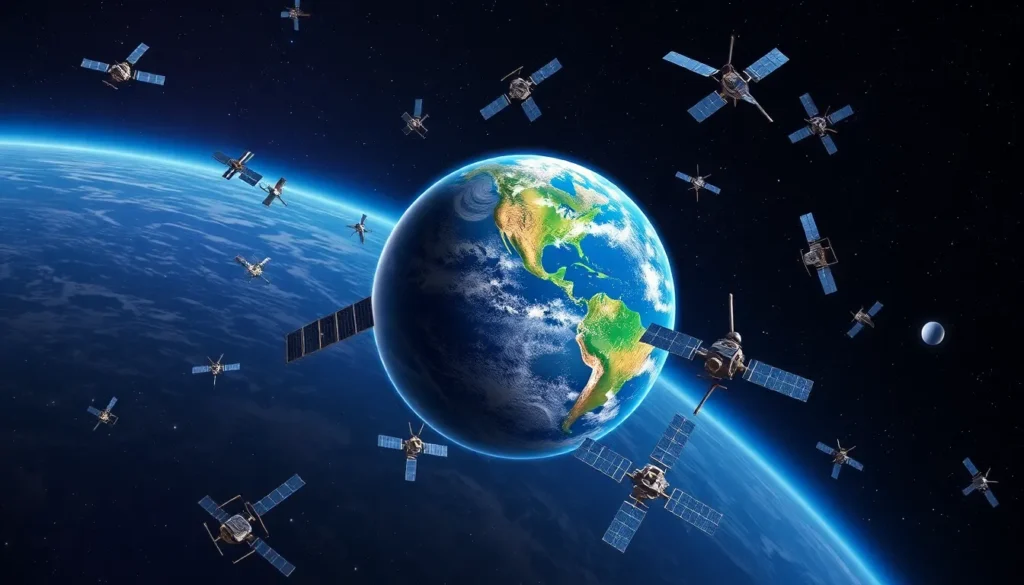
Space technology includes several vital components that enable exploration and operation beyond Earth.
Satellites and Their Functions
Satellites play a central role in space technology. They assist with communication, navigation, and Earth observation. Communication satellites transmit signals for telecommunication and broadcasting. Navigation satellites facilitate global positioning systems, which provide precise location data. Earth observation satellites monitor weather patterns, natural disasters, and climate changes, offering valuable real-time information. Scientific data collection is another crucial function; satellites gather information about atmospheric conditions and resources. Depending on their design, satellites also contribute to military and reconnaissance efforts.
Launch Vehicles
Launch vehicles are essential for sending payloads into space. These rockets transport satellites and spacecraft beyond Earth’s atmosphere. Each launch vehicle varies in capacity, allowing different payload weights and missions. Several categories exist, such as expendable and reusable rockets. Expendable rockets are used once, while reusable ones can return to Earth and be flown again. The choice of launch vehicle depends on mission objectives and destinations, including low Earth orbit or deeper space missions. Examples of current launch systems include SpaceX’s Falcon 9 and United Launch Alliance’s Atlas V, both demonstrating advancements in launch technology.
Recent Advancements in Space Technology
Rapid advancements in space technology shape a future rich with potential. Innovations in various segments, from propulsion systems to satellites, lead the way in exploration and daily applications.
Innovations in Propulsion Systems
New propulsion technologies push boundaries in space travel. Ion propulsion systems gain attention for their efficiency, offering high thrust capabilities for deep-space missions. Advanced chemical propulsion continues to evolve with new fuels, enhancing spacecraft performance. Companies like NASA and SpaceX invest in developing reusable propulsion systems, significantly lowering costs and improving turnaround time for missions. Efficient and reliable engines pave the way for more ambitious projects, including long-duration human exploration of Mars.
Developments in Satellite Technology
Modern satellite technology undergoes transformative changes. Miniaturization leads to the proliferation of small satellites, or CubeSats, revolutionizing data collection and research capabilities. Satellite constellations, such as Starlink, provide global broadband access, addressing connectivity challenges in underserved regions. Improved imaging technology enhances Earth observation satellites, delivering more accurate data for climate monitoring and disaster response. Recent advancements allow for real-time high-resolution imagery, benefitting sectors like agriculture and urban planning.
Applications of Space Technology
Space technology applies across multiple sectors, enhancing everyday life through practical innovations and advancements. Its contributions are evident in communication, navigation, and Earth observation among other fields.
Communication and Navigation
Communication systems heavily rely on satellites for data transmission. Satellites provide critical links for television, internet, and phone services. Navigation technologies, particularly GPS, enable precise location tracking. Millions use GPS applications daily for navigation assistance. The accuracy of these systems plays a vital role in transportation and logistics, ensuring efficient route planning and delivery services.
Earth Observation
Earth observation satellites actively monitor climate and environmental changes. They gather data crucial for weather forecasting and disaster management. Real-time information allows scientists to analyze phenomena such as hurricanes and floods. Agricultural sectors benefit greatly from this intelligence, making informed decisions based on satellite imagery. Environmental monitoring protects natural resources by assessing deforestation and pollution levels, ensuring sustainable practices across industries.
Future Trends in Space Technology
Innovations in space technology continue to evolve rapidly. Development in propulsion systems showcases the shift towards more efficient methods such as ion propulsion and advanced chemical propulsion. These technologies significantly enhance spacecraft performance while reducing mission costs, facilitating long-duration human exploration of destinations like Mars.
Miniaturization of satellites marks another trend in this field. CubeSats exemplify advancements, providing cost-effective and versatile options for various missions. The deployment of satellite constellations, like Starlink, offers global broadband access and transforms connectivity. Enhanced imaging technology also plays a vital role, improving Earth observation capabilities and delivering accurate data for climate monitoring and disaster response.
Future advancements will integrate artificial intelligence into satellite systems, optimizing data analysis and decision-making processes. AI will streamline operations across various sectors, from agriculture to urban planning, enhancing real-time data utilization. Autonomous spacecraft is anticipated to perform complex tasks without human intervention, further expanding exploration opportunities.
Collaboration among international space agencies accelerates these developments. Joint missions and shared resources will lead to groundbreaking discoveries, promoting a global approach to space exploration. Enhanced partnerships enable access to advanced technologies, ensuring all nations benefit from space advancements.
As these trends continue, space technology expands its influence across multiple industries. Communication and navigation advancements directly impact everyday life, while environmental monitoring efforts help protect natural resources. The ongoing integration of space technology into daily routines reveals its potential to transform society and promote sustainable practices.
Space technology continues to play a pivotal role in shaping modern society. Its impact on communication navigation and environmental monitoring can’t be overstated. As advancements in satellite systems and propulsion technologies evolve the potential for new applications grows immensely.
The integration of artificial intelligence and the development of satellite constellations promise to enhance global connectivity and data analysis. This ongoing innovation not only transforms industries but also promotes sustainable practices essential for our future.
The exploration of space technology reveals a world of possibilities that extends far beyond the stars and into everyday life.