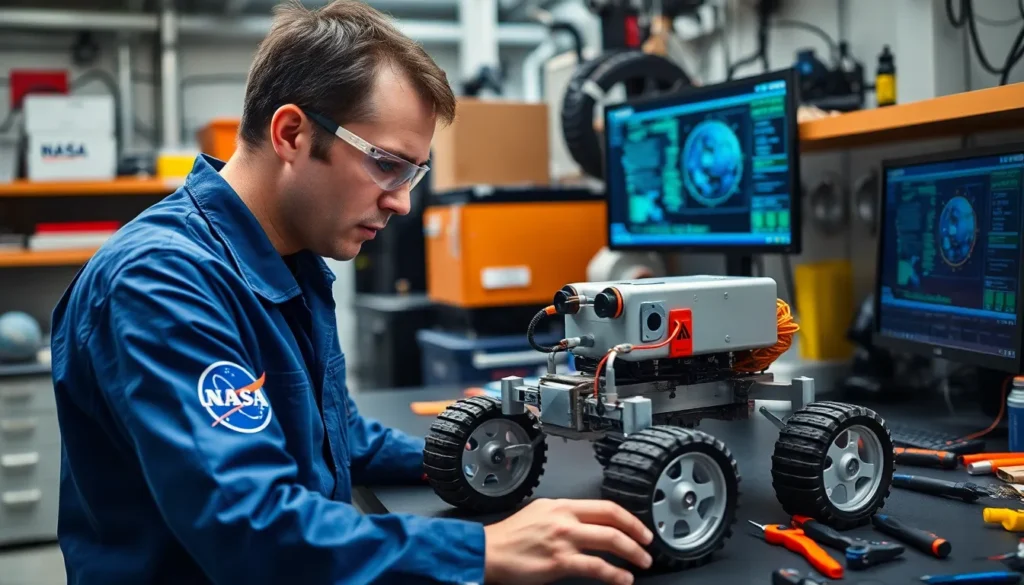
In an era where humanity’s reach extends beyond Earth, space robotics emerges as a game-changer in exploring the cosmos. These advanced machines are designed to perform intricate tasks in the harsh environment of space, paving the way for missions that were once thought impossible. From repairing satellites to conducting experiments on distant planets, space robots are revolutionizing how we interact with the universe.
As technology advances, the capabilities of these robotic systems continue to expand. They not only enhance the efficiency of space missions but also reduce risks to human astronauts. With innovations like autonomous navigation and advanced AI, space robotics is set to play a pivotal role in future explorations, including potential colonization of other planets. The journey into the unknown has never been more exciting, and space robotics is at the forefront of this thrilling adventure.
Overview of Space Robotics
Space robotics encompasses the design, development, and operation of robotic systems for extraterrestrial tasks. These systems vary from remotely operated devices to fully autonomous robots, all engineered to perform outlined tasks without direct human intervention.
Space robots facilitate numerous operations, including satellite servicing, planetary exploration, and habitat construction. They carry out repairs on spacecraft, allowing for extended missions that would otherwise require immediate human assistance. For example, NASA’s Robotic Refueling Mission has demonstrated these capabilities by successfully refueling satellites in orbit.
Advanced technology is a cornerstone of space robotics, with incorporation of artificial intelligence and machine learning enhancing operational efficiency. Robots can analyze real-time data, adapt to unforeseen challenges, and optimize their actions during missions. The Mars rovers, such as Perseverance and Curiosity, illustrate this ability by conducting scientific experiments and navigating complex terrains on the Martian surface autonomously.
Collaboration between robots and human astronauts is crucial. Robots assist in hazardous conditions, tackling tasks that pose risks to human safety. This ensures that astronauts focus on critical decision-making and mission objectives rather than routine tasks, ultimately improving overall mission success rates.
As innovations in robotics continue, applications expand. Future missions to the Moon, Mars, and beyond aim to leverage robotic systems for construction and maintenance of extraterrestrial bases. These advancements not only streamline operations but also open avenues for sustainable human presence in space.
Types of Space Robots
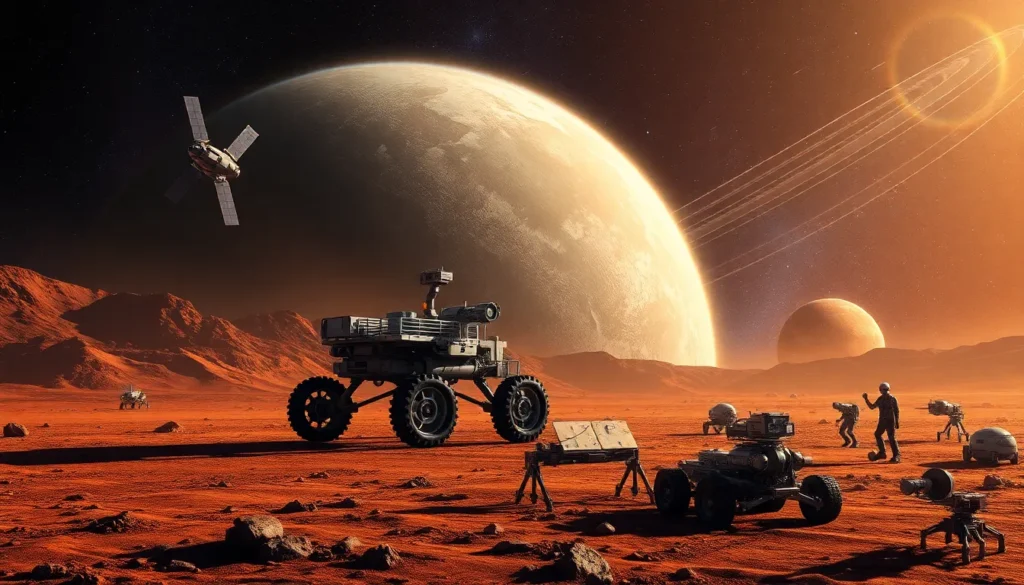
Various types of space robots serve distinct functions in exploration and operations beyond Earth. These robots include rovers, orbital satellites, and space probes, each designed for specific tasks in challenging environments.
Rovers
Rovers are mobile robots that traverse the surface of celestial bodies. They conduct scientific research, analyze soil samples, and capture high-resolution images. Notable examples include NASA’s Perseverance and Curiosity, which utilize advanced instruments to investigate Martian geology and search for signs of past life. Rovers often feature autonomous navigation systems that allow them to adapt to terrain obstacles, facilitating long-duration missions without direct human control.
Orbital Satellites
Orbital satellites serve critical roles in monitoring and communicating from space. These robots orbit planets or moons, gathering data about atmospheric conditions, surface characteristics, and potential resources. An example includes the Hubble Space Telescope, which has provided invaluable insights into the cosmos. Orbital satellites also support Earth observation, enabling climate monitoring and disaster response. Employing robotic arms and servicing capabilities, some satellites can perform maintenance tasks, extending their operational lifespan.
Space Probes
Space probes are unmanned robotic systems designed to travel beyond Earth’s orbit to investigate distant celestial bodies. They gather data and transmit it back to Earth for analysis, contributing to humanity’s understanding of the solar system. Notable missions include Voyager 1 and 2, which have provided groundbreaking data about outer planets. Space probes are equipped with various instruments, such as spectrometers and cameras, allowing them to conduct scientific experiments in extreme environments.
Applications of Space Robotics
Space robotics plays a vital role in multiple applications, driving innovation and enhancing missions beyond Earth. Key areas of application include planetary exploration, satellite maintenance and repair, and scientific research.
Exploration of Other Planets
Rovers, like Perseverance and Curiosity, explore the surfaces of other planets, conducting research and analyzing samples. These robots utilize advanced autonomous navigation systems to traverse challenging terrains, significantly enhancing geological and atmospheric studies. For instance, Perseverance is equipped with specialized tools for astrobiological investigation, collecting rock samples for future return missions. Space agencies, including NASA and ESA (European Space Agency), increasingly rely on these robotic systems to gather data from Mars, Jupiter’s moons, and beyond.
Satellite Maintenance and Repair
Robotic satellites facilitate essential maintenance and repair tasks in orbit. The Robotic Refueling Mission (RRM) demonstrates how robotic arms service satellites, extending their operational lifespans. These systems execute complex procedures, such as refueling, replacing parts, and upgrading technology, without requiring human presence in space. The efficiency of these operations reduces costs and maximizes satellite functionality, proving invaluable for long-term space missions.
Scientific Research
Robots significantly advance scientific research, conducting experiments in environments inhospitable to humans. Space robotics collects data on cosmic phenomena and analyzes samples from celestial bodies. Missions like the Mars Sample Return project involve robotic systems that retrieve materials for further analysis on Earth. Additionally, instruments aboard orbiting observatories, such as the Hubble Space Telescope, rely on robotic components to gather and process astronomical data, contributing to our understanding of the universe.
Challenges in Space Robotics
Space robotics faces several significant challenges that impact mission success and operational efficiency. These challenges stem from technical limitations, environmental factors, and communication delays.
Technical Limitations
Technical limitations hinder the development and performance of space robots. Design constraints exist due to weight and power restrictions, which affect the materials and components used in robotic systems. Limited battery life restricts operational duration, often necessitating frequent recharging or replacement. Additionally, robotic sensors and actuators may face challenges in harsh environments, leading to decreased functionality. Robots also require sophisticated programming to navigate complex terrains and perform tasks autonomously, which poses a challenge in ensuring reliability and adaptability.
Environmental Factors
Environmental factors present significant challenges for space robotics. Extreme temperatures, radiation exposure, and microgravity conditions complicate robotic operations. For instance, thermal fluctuations can damage components, while radiation can cause malfunctions or degraded performance over time. Dust and debris on planetary surfaces, such as Mars, can obstruct sensors and affect mobility. Furthermore, the lack of atmosphere in space means that robots cannot rely on traditional cooling methods, necessitating innovative thermal management solutions.
Communication Delays
Communication delays pose considerable challenges for remote space operations. Signals transmitted between Earth and robotic systems experience latency, especially for missions beyond low Earth orbit. For example, communication with Mars can take between 4 to 24 minutes one way, depending on the planets’ positions. Delays limit real-time control, requiring robots to operate autonomously for extended periods. This reliance on automated systems increases the complexity of programming and necessitates robust algorithms to handle unexpected situations without immediate human intervention.
Future of Space Robotics
The future of space robotics promises groundbreaking advancements and transformative potentials in extraterrestrial exploration. Ongoing innovations in artificial intelligence and machine learning are set to enhance robotic functionality, improving real-time data analysis and adaptive responses to unpredictable environments. Robotics expert institutions, like NASA and ESA, focus on developing next-generation rovers and probes that operate with higher degrees of autonomy.
The integration of autonomous drones and robotic arms enables future missions to conduct precise tasks, such as assembling structures in orbit or on planetary surfaces. Upcoming missions to Mars plan to utilize robotics for habitat construction, aiming to support long-term human presence. These robotics advancements also reduce dangers for human astronauts by taking on risky tasks, thus increasing overall mission success rates.
Several upcoming projects showcase the potential landscape of space robotics. The Lunar Gateway project involves deploying robots alongside astronauts to prepare for extended lunar exploration and harvesting resources, ensuring sustainable human presence. Furthermore, the Mars Sample Return mission aims to use robotic systems to collect and transport samples back to Earth, significantly streamlining the process of interplanetary research.
Collaboration between robots and advanced AI is crucial, promoting efficient decision-making and operational synergy. Future robotic systems are expected to incorporate swarming technology, allowing multiple units to work together, enhancing task efficiency and operational capabilities.
Challenges remain, including the design and development of systems resistant to environmental hazards and capable of functioning autonomously over lengthy timeframes. Continuous research into robust algorithms and materials aims to address these issues, ensuring reliable performance in the face of extreme conditions.
As developments in space robotics advance, they will redefine human capabilities in exploring outer space, revealing new worlds and expanding our understanding of the universe.
Space robotics is revolutionizing the way humanity explores the cosmos. These advanced machines are not only performing complex tasks but also paving the way for sustainable human presence beyond Earth. As technology continues to evolve, the integration of AI and autonomous systems will enhance the efficiency of robotic operations.
The future holds exciting possibilities with upcoming missions aimed at utilizing robotics for habitat construction and scientific research. Despite the challenges that come with operating in harsh environments, ongoing innovations ensure that space robots will remain at the forefront of exploration. This dynamic field will continue to expand our understanding of the universe and redefine the boundaries of human capability in space.