The commercial satellite launch industry is transforming the way we access and utilize space. With advancements in technology and a growing demand for satellite services, private companies are stepping up to meet the needs of governments and businesses alike. This shift not only makes space more accessible but also drives innovation in various sectors, from telecommunications to Earth observation.
As competition heats up, the landscape of satellite launches is evolving rapidly. New players are entering the market, offering cost-effective solutions and faster turnaround times. This dynamic environment is reshaping the future of space exploration and satellite deployment, paving the way for exciting developments in communication, navigation, and beyond. Embracing this change can unlock opportunities that were once unimaginable, making it an exhilarating time to watch the skies.
Overview Of Commercial Satellite Launch
The commercial satellite launch industry has undergone significant changes due to technological advancements and rising demand for satellite services. Private companies now provide launch services for a variety of applications, enabling efficient delivery of satellites into orbit.
The following key factors illustrate the industry’s evolution:
- Cost Reduction: Companies like SpaceX and Rocket Lab have introduced reusable rocket technology, which substantially lowers launch costs. Specifically, reusable rockets can decrease expenses by approximately 30-40% compared to traditional expendable rockets.
- Increased Availability: Enhanced launch frequencies allow satellites to be deployed more rapidly. For instance, SpaceX aims for up to 100 launches per year in the near future, increasing access to orbital positions.
- Diverse Payloads: The industry accommodates various payload types, from small CubeSats to large communication satellites. This flexibility caters to different market segments, including governmental and commercial clients, ensuring tailored services based on specific requirements.
- Global Reach: Commercial satellite launches take place from various global launch sites. Countries such as the United States, India, and China actively participate in this sector, contributing to a robust international market.
- Innovation and Collaboration: Emerging technologies, including advanced propulsion systems and satellite miniaturization, drive innovation. Additionally, collaborations between private companies and governmental agencies enhance research and development.
As the commercial satellite launch market continues to grow, these factors contribute to making space activities more accessible and efficient, paving the way for further advancements in telecommunications, navigation, and beyond.
Key Players In The Market
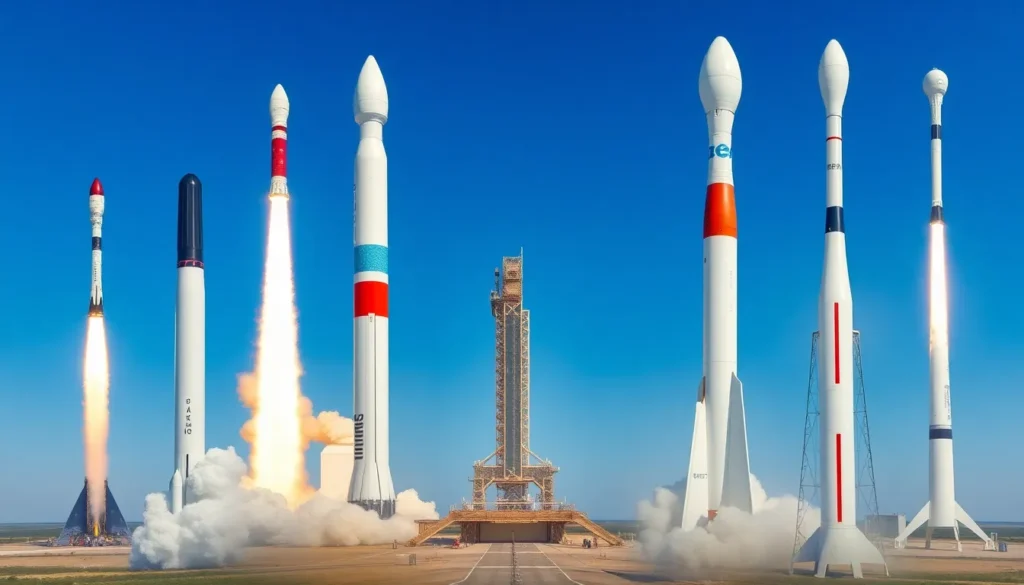
Key players in the commercial satellite launch market include established companies and emerging startups, each contributing to the evolving landscape of space services. These entities play crucial roles in technology development, service offerings, and market competition.
Major Companies Involved
- SpaceX: SpaceX dominates the commercial launch sector with its Falcon 9 and Falcon Heavy rockets. The company focuses on reusability, significantly lowering costs and increasing launch frequency.
- Arianespace: Arianespace provides reliable launch services with its Ariane 5 and Soyuz rockets. The company serves various markets, including commercial, government, and institutional clients.
- United Launch Alliance (ULA): ULA offers dependable launch solutions through its Atlas V and Delta IV rockets. The partnership between Boeing and Lockheed Martin emphasizes national security and large payload capabilities.
- Northrop Grumman: Northrop Grumman engages in satellite launches via its Antares rocket. The company also focuses on integrated missions for NASA and commercial clients.
- Rocket Lab: Rocket Lab specializes in small satellite launches with its Electron rocket. The company emphasizes rapid deployment and affordability, addressing the needs of small satellite operators.
Emerging Startups
- Relativity Space: Relativity Space utilizes 3D printing technology to create rockets, aiming for flexible designs and rapid production. The company targets both small and medium payload markets.
- Astra: Astra focuses on small satellite launches with cost-effective solutions. The company emphasizes its rapid launch capabilities, appealing to a diverse range of customers.
- OneWeb: OneWeb aims to provide global internet coverage through a constellation of low Earth orbit satellites. The company collaborates with various launch providers to deploy its satellite network.
- Isar Aerospace: Isar Aerospace, based in Germany, focuses on dedicated small satellite launches. The company emphasizes European market access, expanding opportunities for satellite operators.
- Virgin Orbit: Virgin Orbit employs a unique air-launch system to deploy small satellites. This method enhances flexibility and access to various orbits, catering to specific client needs.
Technologies Used In Commercial Launches
Technological advancements significantly impact commercial satellite launches, emphasizing efficiency and flexibility. Key innovations include various rocket types and sophisticated launch systems.
Rocket Types
- Reusable Rockets
Reusable rockets, such as SpaceX’s Falcon 9, facilitate cost savings and increased launch frequency. This technology allows the recovery and refurbishment of rocket stages.
- Small Launch Vehicles
Small launch vehicles, like Rocket Lab’s Electron, cater to the growing demand for small satellite deployment. These rockets specialize in launching payloads under 500 kg efficiently and affordably.
- Hybrid Rockets
Hybrid rockets, using a combination of solid and liquid propellants, offer improved performance and safety. Companies like Virgin Galactic utilize this technology for suborbital flights and space tourism.
- Heavy-Lift Rockets
Heavy-lift rockets, such as the Ariane 5 and SpaceX’s Falcon Heavy, transport substantial payloads into orbit. These rockets enable the launch of large satellites and interplanetary missions.
Launch Systems
- Vertical Launch Systems
Vertical launch systems involve launching rockets from ground-based pads, ensuring stability during lift-off. This method remains the most common approach in the industry.
- Air Launch Systems
Air launch systems, exemplified by Virgin Orbit, involve launching rockets from aircraft at high altitudes. This strategy allows for more flexible launch windows and targets.
- Mobile Launch Platforms
Mobile launch platforms offer adaptability for various launch sites. These platforms enhance logistical efficiency and reduce time spent on ground preparation.
- Integrated Launch Systems
Integrated launch systems streamline the launch process by coordinating payload integration, fueling, and liftoff. These systems minimize downtime and enhance reliability.
Economic Impact Of Commercial Satellite Launch
Commercial satellite launches significantly influence economic development, fostering job creation and market growth in multiple sectors.
Job Creation
Commercial satellite launches directly contribute to job creation across various skill levels and industries. Companies like SpaceX and Rocket Lab have generated thousands of high-tech jobs, ranging from engineering to manufacturing and support services. According to a report by the Aerospace Industries Association, the aerospace sector, including satellite launches, employs over 2.5 million people in the U.S. alone. Moreover, the rise of startups disrupts conventional employment patterns, as they seek innovative talent in software development, data analysis, and project management to meet their specific needs. The expansion of commercial space activities also fuels indirect job opportunities in adjacent fields, such as logistics, education, and research.
Market Growth
Market growth in the commercial satellite sector shows impressive trends, fueled by rising demands for satellite services. The global satellite industry reached a value of $366 billion in 2022 and is projected to grow at a compound annual growth rate (CAGR) of 5% between 2023 and 2030, according to Satellite Industry Association reports. Increased capacity for satellite launches enables companies to expand services related to telecommunications, broadcasting, and Earth observation. The entry of new players accelerates competition, driving prices lower and encouraging innovation. Companies increasingly invest in satellite technology, with billions allocated for new projects and systems, further stimulating market expansion. The overall economic activity around commercial satellite launches enhances the technology ecosystem, promoting research, development, and partnerships across various sectors.
Challenges Faced By The Industry
The commercial satellite launch industry encounters various challenges that inhibit growth and efficiency. Understanding these challenges helps stakeholders devise effective strategies for progress.
Regulatory Hurdles
Regulatory hurdles pose significant challenges for the industry. Compliance with national and international regulations requires extensive documentation and coordination with multiple agencies. Companies must secure licenses from entities like the Federal Aviation Administration (FAA) in the U.S. and similar organizations globally. Additionally, export controls under the International Traffic in Arms Regulations (ITAR) complicate technology transfers and international collaborations. Streamlining regulatory processes is essential to enhance the speed of launches and reduce costs for commercial providers.
Environmental Concerns
Environmental concerns present another pressing challenge for the commercial satellite launch sector. Rocket launches contribute to atmospheric pollution and carbon emissions, raising questions about sustainability. The use of solid rocket propellants can release harmful substances into the atmosphere. Growing scrutiny from environmental agencies and the public demands that companies adopt greener technologies and practices. Implementing reusable launch systems alongside alternative fuels can minimize the ecological footprint, aligning operations with contemporary environmental standards. Adopting these measures can enhance the industry’s reputation while addressing climate change issues.
Future Trends In Commercial Satellite Launch
The commercial satellite launch industry is poised for significant advancements as technology evolves and market dynamics shift. Key trends are emerging that shape the future of satellite deployment.
Innovations On The Horizon
Innovations continue to drive the commercial satellite launch sector forward. Companies are exploring next-generation propulsion systems, such as electric and hybrid engines, to enhance efficiency and reduce costs. Advanced materials like carbon composites and lightweight alloys are being utilized to construct rockets, improving payload capacities while minimizing fuel consumption.
Furthermore, satellite miniaturization allows for more compact and cost-effective satellite designs. This trend facilitates larger constellations of small satellites, providing broad coverage for Earth observation and telecommunications. Additionally, autonomous technologies and enhanced artificial intelligence (AI) contribute to improving launch operations, enabling real-time decision-making and minimizing downtime.
Potential Market Changes
The commercial satellite market is changing rapidly due to various factors. Increased collaboration among private companies, government agencies, and international partners is on the rise, fostering a more integrated approach to satellite launches. Such partnerships may lead to shared resources and reduced costs, aiding in global access to satellite services.
As countries establish more spaceports, competition in satellite launch services intensifies, driving prices down and increasing launch frequency. Additionally, emerging markets in regions like Africa and Southeast Asia are beginning to invest in satellite technology, expanding the customer base. This growth also introduces competition among existing providers and startups, driving innovation and enhancing service offerings.
With the projected CAGR of 5% from 2023 to 2030, the industry anticipates further investment in advanced satellite technologies and launch capabilities. As demand for satellite services rises, market players must adapt swiftly to these changes to remain competitive and meet evolving customer needs.
The commercial satellite launch industry stands at a pivotal moment marked by rapid innovation and growing demand. As private companies continue to push the boundaries of technology and efficiency the landscape is evolving to accommodate a diverse range of customer needs. The competitive environment fosters not only cost-effective solutions but also quicker deployment times which are essential in today’s fast-paced world.
While challenges such as regulatory compliance and environmental impacts remain significant the industry’s commitment to sustainability and collaboration promises a brighter future. With advancements on the horizon the potential for growth and transformation in satellite services is immense. The journey ahead will undoubtedly be shaped by those who embrace change and seek to redefine the possibilities of space exploration.